The Four Most Important Dividend Stock Ratios
May 26, 2025 By Rick Novak
Income investors may find greater appeal in the higher yields certain stocks offer. A high-yielding stock is one that, under normal market conditions, offers a dividend yield higher than the yield on the United States Treasury's 10-year note. The yield on a 10-year U.S. Treasury was 0.91% as of June 5, 2020. A company's financial statements, annual reports, investor presentations, and other documents contain financial ratios. Return on equity, price-to-earnings, payout ratios, and multiples are standard financial metrics.
Even though there are likely dozens of distinct financial ratios, knowing just a handful of the essential indicators can help investors make more educated selections and avoid common pitfalls.
Consequently, a high-yielding stock was defined as one with a forward dividend yield or trailing dividend yield of more than 0.91 percent. But before putting money into equities with high dividend yields, it's essential to consider whether or not those payouts can be maintained. Investors interested in dividend stocks could assess the dividends' quality by looking at the dividend coverage ratio, dividend payout ratio, Net Debt to EBITDA, and free cash flow to equity ratio.
1. Dividend Payout Ratio

Dividend investors likely know more about the dividend payout ratio than any other financial ratio. The dividend payout ratio evaluates the proportion of net income distributed to shareholders.
Divide the dividends paid by a corporation during a specified period by its earnings for that period to get its dividend payout ratio.
In the past year, Coca-Cola may have paid out $6 in dividends per share while earning $10 ($6 divided by $10 = 60%), yielding a payout ratio of 60%.
Dividend payout ratio analysis is popular among investors because it provides insight into a company's dividend sustainability and expansion potential.
If a dividend payment represents a large portion of a company's earnings, as shown by a payout ratio of 70% or above, the dividend may be unsustainable. There may need more money to maintain the dividend payment if business trends suddenly decline. Firms with high dividend payout ratios may find it more challenging to increase their dividend payments without robust profit growth.
Generally, we look for businesses with payout ratios lower than 60% before investing. But, if the company's operation is relatively stable (like a regulated utility firm) and maintains robust financial health, we will invest in it despite its higher payout ratio.
2. Dividend Coverage Ratio
Dividend coverage ratios are determined by comparing a company's net income (after preferred dividend payments) to its dividends. The dividend coverage ratio shows how often dividends on the common stock might be paid out of a company's net income in a given fiscal year. It is generally preferable to have a dividend coverage ratio that is larger. Free cash flow to equity should be included alongside dividend coverage and dividend payout ratios when analyzing dividend equities (FCFE).
3. Free Cash Flow
A business with negative free cash flow has a very low chance of making it.
The statement of cash flows is used to determine the company's free cash flow. Free cash flow is calculated by deducting a company's capital from its cash flow from operations (i.e., net income adjusted for non-cash expenses like depreciation).
With free cash flow, a firm can pay dividends to shareholders, buy back its stock, or make large purchases without draining its cash reserves.
Capital-intensive firms with minimal competitive advantages are a common characteristic of companies that struggle to produce free cash flow. We look for businesses that can maintain a positive free cash flow in all but the most adverse conditions.
Companies like Paychex (PAYX) exist. Small and medium-sized businesses can take advantage of the company's wide range of payroll processing and outsourcing services. It generates substantial and stable free cash flow because its operations necessitate low levels of capital and benefit from high levels of recurring revenue.
4. Net Debt to EBITDA Ratio

Divide a firm's total liabilities by the company's operating income before interest, taxes, and depreciation (EBITDA) to get the net debt to EBITDA ratio. A company's indebtedness and capacity to make debt payments are evaluated by calculating the net debt to EBITDA ratio. Compared to the average or other companies in the same industry, a lower ratio indicates a more desirable business. Rising net debt to EBITDA ratio across multiple reporting periods is a warning sign that a dividend-paying corporation may reduce its dividend payment in the near future.
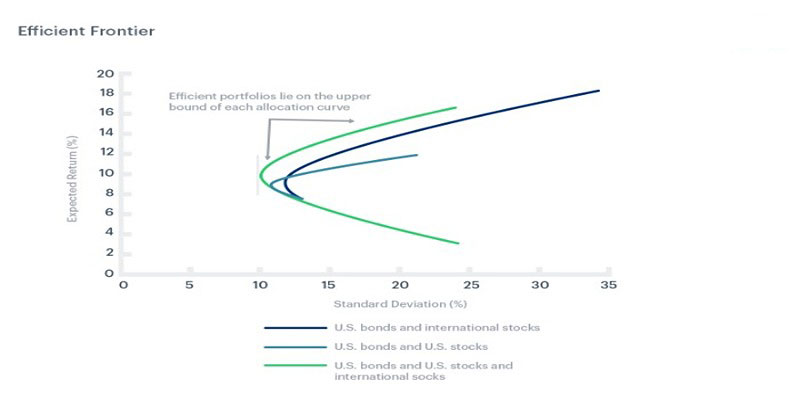
What Is the Efficient Frontier?
Dive into the fundamentals of the efficient frontier and learn how its elements work together for maximum potential gains with minimal risk. Find out all you need to know about it in this helpful blog post!
May 26, 2025 Rick Novak

How Is Cashback Profitable for Credit Card Companies?
Get insights into how credit card companies benefit from cashback programs, plus some examples that demonstrate the profitability of this type of reward program.
May 26, 2025 Kelly Walker

Understanding Home Equity Loans
Learn about home equity loans, including their pros, cons, and qualifications requirements. Discover if this financial tool is the right choice for you.
May 26, 2025 Kelly Walker

The IRS Approves a Workaround for the State and Local Tax Cap
The Internal Revenue Service has authorized a method to avoid the SALT cap established by the Tax Cuts and Jobs Act of 2017. To get around the SALT cap, taxpayers in high-tax jurisdictions might make charitable contributions to state-level funds in exchange for a state tax credit. The IRS has ruled that taxpayers can take a federal tax deduction for charitable donations if they also receive a state tax credit of no more than 15% of the total amount of the contribution.
May 26, 2025 Rick Novak

Why You Donate Your Car To Charity
Nowadays, charitable contributions are more important than ever. When you donate to a good cause, you not only help those in need, but you also gain in other ways: financially, emotionally, and psychologically. Donating an automobile to charity is a great act of selflessness that benefits the whole community. It may be out of the ordinary to donate in this way, but even the smallest amount can make a huge difference for those in need. In this article, we'll go over six reasons why donating your car to charity is a great idea.
May 26, 2025 Kelly Walker

Multiple Linear Regression (MLR) - An Introduction to the Formula and Its Application
Learn what Multiple Linear Regression (MLR) is and how it can be used to analyze relationships between multiple independent variables and a dependent variable. Also, learn the practical applications of MLR, particularly in finance.
May 26, 2025 Kelly Walker